Trump signs executive order to rename Lake Ontario as Lake America

Guardian:

Donald Trump signed an executive order on Thursday directing the federal government to rename Lake Ontario, making it Lake America, amid his escalating trade war with Canada.

The order directs federal agencies to adopt the name-change on US maps, documents and databases. But Trump has no authority to rename Canada’s portion of the lake, nor to compel Canada, international legal bodies, international mapmakers, or the rest of the world to adopt a new name.

The move follows a similar action the president took on the first day of his second term in office, when he signed an order renaming the Gulf of Mexico as the “Gulf of America”.

“We have a gulf and we have a lake – now all we need is an ocean. Maybe we’ll have to change the name of the Atlantic and/or the Pacific,” he told reporters, sitting at the Resolute Desk in the Oval Office. “Maybe we’ll change them both.”

After sailing Liberty ships in the Atlantic, Pacific, and Caribbean during the war my dad sailed the Great Lakes for years. He loved the ore boats.

Leave a comment

Это мир


Leave a comment

Rio Reiser, * 09.01.1950; † 20.08.1996

Leave a comment

Transparent political systems and conspiratorial politics

[Peter] Reddaway has emphasized that modern Russian political life cannot be understood without reference to “political technology,” which represents an extreme form of political consultancy involving manipulation of individuals and large-scale deception. Since, Reddaway explained, at the core of any “political technologist’s” plan, there lies a conspiracy, any good analyst of Russian politics needs to be a conspiracy theorist as well. Conspiracy theorists, he noted, are usually mocked in countries with transparent political systems. But a system becomes more prone to conspiracies if the ruler remains in power for a long time and controls large parts of its wealth. Russia and Iran, he observed, would be two examples of present-day countries with conspiratorial politics.

—John B. Dunlop, The Moscow Bombings of September 1999, (Stuttgart: ibidem-Verlag, 2012), 17-18.

Leave a comment

Days of miracle and wonder

Comments Off on Days of miracle and wonder

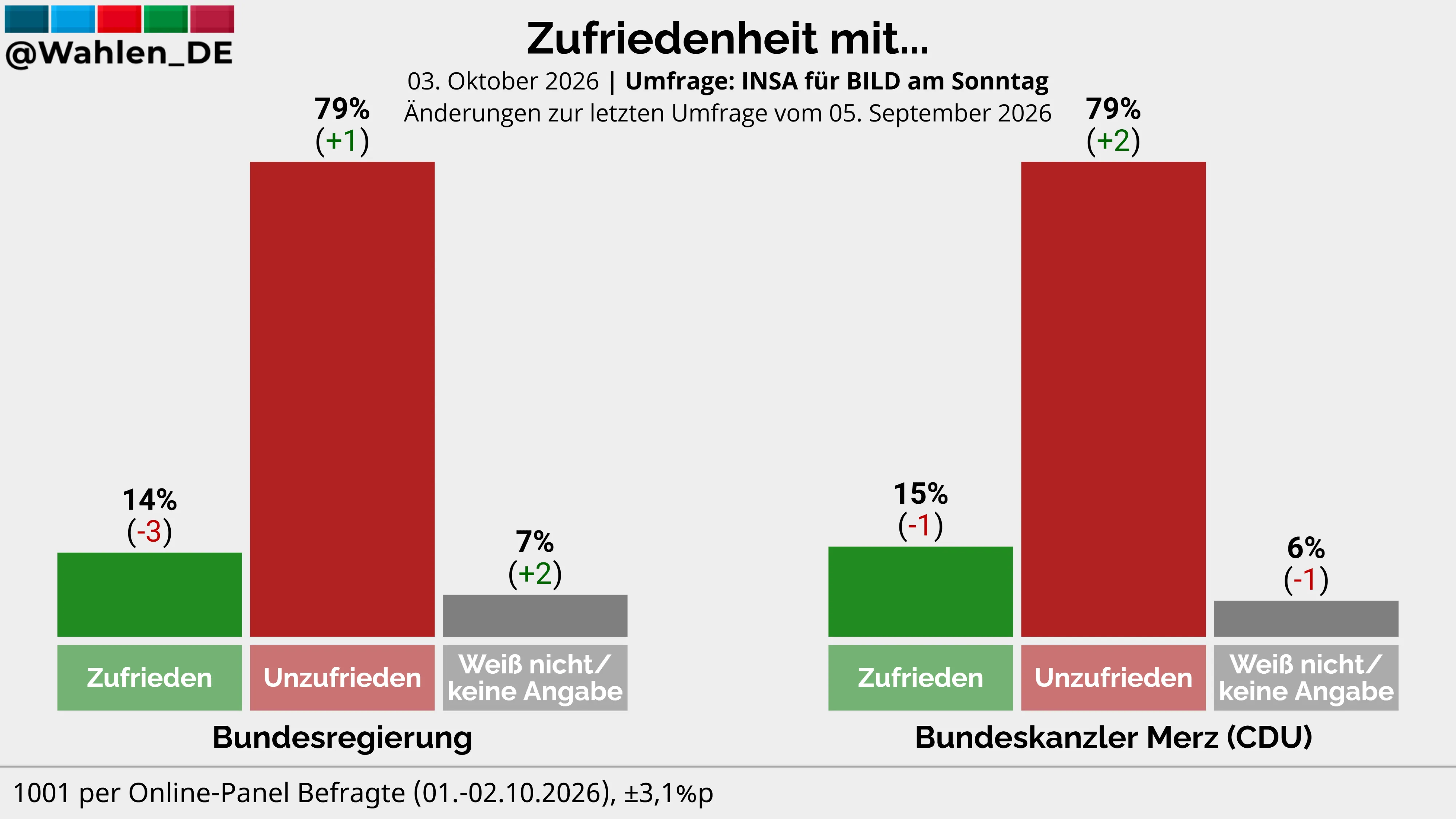
German politics August 2026 in three graphs

Comments Off on German politics August 2026 in three graphs

Домашнее Задание

Я делаю домашнее задание. Я делал домашнее задание. Я буду делать домашнее задание.

Comments Off on Домашнее Задание

A historian and writer who is unusually gentle and kind (and not Palestinian) has now disappeared into the Israeli prison system.

Nika Dubrovsky, CounterPunch:

Impossible not to have a view on Israeli government policy these days, but Artem’s views are not so different than those held by the mainstream Israeli newspaper Haaretz. In which case, the question is what has Artem done and why has he been sitting in a Shin Bet prison without habeas corpus for a week?

To arrest Artem is to make private individuals afraid and to make them internalize their penguin-like condition, to shut up, and sit quietly in the corner. Arresting a bespectacled writer with a narrow audience is both easy and makes for a perfectly instructive example. Before Artem was arrested, it seemed to many of us – me included – that there were ‘anomaly zones’ out there: in those anomaly zones, one could be somewhat safe from arbitrary arrest. It was felt that as long as you did not cross certain well understood line, you could write, read, and speak about pretty much anything. Don’t join a party, don’t donate to certain organizations, don’t say certain things. But the lines that seemed to exist have now been erased and what you whisper in your kitchen can now get you into a prison cell.

The everyday curdles into a nightmare. The kitchen and the prison are becoming the same room. We have become like frogs that do not notice that the water in which they are swimming has started to come to a boil. We have made straightforward cannibalism normal.

When Artem was arrested, his old blog opponents said, what did he expect, going to Israel, when he could have sat quietly in Petersburg and minded his own business. Sorry. That’s just the attitude of the frog. There are no safe places left. There are no crags left to hide a penguin. Artem is not the hero-petrel. He is much more like the penguin. And so, it is now getting clear to us, that the penguin hunt has begun. Anyone at all can be picked up and tossed into the darkness.

Gorky did not know much about penguins. Although they look defenseless, they can stand their ground as a pack and peck their way out of trouble; in water, penguins are agile and fast, forming ‘rafts’ to beat adversaries and escape. Artem needs his penguins to act in unison. Please make noise for him.

Most of this essay really spoke to me. Reading news of journalists, historians, writers, being arrested in Russia and Israel, Jacques Baad, a retired Swiss colonel having his bank  accounts frozen in Belgium for his writing about Ukraine, a Russian journalist being expelled from France for her views on Ukraine, a Turkish journalist having his banking frozen here in Berlin for his writing on Gaza, with the justification that by writing on Gaza he was serving Russia, British citizens being arrested, and in fact en masse, by the hundreds, simply for voicing support for Palestinians, all of these expose societal myths about free speech, democracy, due process, as what they are: myths.

What really stood out for me, though, was her conclusion, where she continues her analogy to say that humans, like penguins, can “stand their ground as a pack and peck their way out of trouble”, or form “‘rafts’ to beat adversaries and escape”. Here, for us, there seems to be little ability to peck our way out of trouble. Escape seems for many people to be the possibility that remains, however escape does not alter the threatening environment.

Comments Off on A historian and writer who is unusually gentle and kind (and not Palestinian) has now disappeared into the Israeli prison system.

Comments Off on

Browning

Rzhanitsky had three unspent bullets left in his revolver but, maddened by his failure and perhaps, in his agitation, forgetting that they were there, he flung his Browning against the rocks.

—Boris Pasternak, Doctor Zhivago, (London: Vintage, 2002), 320.

I used to own a Browning, as one of a number of classic weapons. Browning handguns and machine guns were certainly present in Russia – Stolypin after all was assassinated with a Browning – but Browning never made a revolver. I read on social media that while automatics were becoming introduced “revolver” was a term commonly used for any handgun, so one could assume that this was, in fact, a Browning, just labeled “revolver” by Hayward and Harari’s translation, but we were also told Rzhanitsky had earlier fired three shots, leaving three. Now perhaps the suggestion is that he started out with six in his mag, but this to me seems less probable than the idea Pasternak pictured this weapon when fully loaded containing six bullets. It was not a Browning.

Comments Off on Browning